---
title: "The Power of Direct Mail in 2026 - Part 1: 5 Formats That Still Win Attention and Drive Action"
description: "Reaching people has never been easier. Marketing teams can deploy campaigns across email, paid media, social platforms, and automated workflows in minutes. But that abundance has created a new problem: audiences are overwhelmed, and messages increasingly blur together."
image: https://blog.vomela.com/hubfs/Power_direct_mail_PT1.png
---
[](https://www.vomela.com/)
Search the The Vomela Companies website
- What We Do
- first-column
- [Product Solutions](https://www.vomela.com/what-we-do/expertise)
- [Transportation Graphics](https://www.vomela.com/what-we-do/expertise/fleet-graphics/)
- [POP Marketing & Design](https://www.vomela.com/what-we-do/expertise/pop-design/)
- [Events & Exhibits](https://www.vomela.com/what-we-do/expertise/event-graphics/)
- [Store Décor](https://www.vomela.com/what-we-do/expertise/store-decor/)
- [Collateral & Commercial](https://www.vomela.com/what-we-do/expertise/print-digital-collateral/)
- [Digital Media](https://www.vomela.com/digital-media/)
- second-column
- [Industries We Serve](https://www.vomela.com/who-we-serve/)
- [Retail](https://www.vomela.com/who-we-serve/retail-graphics/)
- [Transportation](https://www.vomela.com/who-we-serve/fleet-and-transportation/)
- [Education](https://www.vomela.com/who-we-serve/education-graphics/)
- [Healthcare](https://www.vomela.com/who-we-serve/healthcare-graphics-branding/)
- [Banking & Finance](https://www.vomela.com/who-we-serve/banking-finance-graphics-branding/)
- [Arts & Entertainment](https://www.vomela.com/who-we-serve/arts-entertainment-event-branding/)
- third-column
- [Services](https://www.vomela.com/what-we-do/services/)
- [Print Production](https://www.vomela.com/what-we-do/services/print-production/)
- [Creative Services](https://www.vomela.com/what-we-do/services/creative-services/)
- [Engineering & Protyping](https://www.vomela.com/what-we-do/services/engineering-prototyping/)
- [Installation](https://www.vomela.com/what-we-do/services/installation/)
- [IT Solutions](https://www.vomela.com/what-we-do/services/it-solutions/)
- [Project Management](https://www.vomela.com/what-we-do/services/project-management/)
- [Kitting, Shipping & Warehousing](https://www.vomela.com/what-we-do/services/print-fulfillment/)
- fourth-column
- [Gallery](https://www.vomela.com/our-work/project-gallery/)
- Our Work
- first-column
- [Case Studies](https://www.vomela.com/our-work/case-studies/)
- second-column
- [Gallery](https://www.vomela.com/our-work/project-gallery/)
- Who We Are
- [About Us](https://www.vomela.com/who-we-are/about-us/)
- [Our Companies](https://www.vomela.com/our-companies/)
- [75th Anniversary](https://www.vomela.com/who-we-are/75-anniversary/)
- [Careers](https://www.vomela.com/who-we-are/careers/)
- [ESG](https://www.vomela.com/who-we-are/esg/)
- Resources
- [Blog](https://blog.vomela.com/)
- [Downloads](https://www.vomela.com/downloads/)
- [Videos](https://www.vomela.com/resources/videos/)
- [Let's Talk.](https://www.vomela.com/contact/)
- [Home](https://www.vomela.com/)
- What We Do
- [Product Solutions](https://www.vomela.com/what-we-do/expertise)
- [Transportation Graphics](https://www.vomela.com/what-we-do/expertise/fleet-graphics/)
- [POP Marketing & Design](https://www.vomela.com/what-we-do/expertise/pop-design/)
- [Events & Exhibits](https://www.vomela.com/what-we-do/expertise/event-graphics/)
- [Store Décor](https://www.vomela.com/what-we-do/expertise/store-decor/)
- [Collateral & Commercial](https://www.vomela.com/what-we-do/expertise/print-digital-collateral/)
- [Digital Media](https://www.vomela.com/digital-media/)
- [Industries We Serve](https://www.vomela.com/who-we-serve/)
- [Retail](https://www.vomela.com/who-we-serve/retail-graphics/)
- [Transportation](https://www.vomela.com/who-we-serve/fleet-and-transportation/)
- [Education](https://www.vomela.com/who-we-serve/education-graphics/)
- [Healthcare](https://www.vomela.com/who-we-serve/healthcare-graphics-branding/)
- [Banking & Finance](https://www.vomela.com/who-we-serve/banking-finance-graphics-branding/)
- [Arts & Entertainment](https://www.vomela.com/who-we-serve/arts-entertainment-event-branding/)
- [Services](https://www.vomela.com/what-we-do/services/)
- [Print Production](https://www.vomela.com/what-we-do/services/print-production/)
- [Creative Services](https://www.vomela.com/what-we-do/services/creative-services/)
- [Engineering & Protyping](https://www.vomela.com/what-we-do/services/engineering-prototyping/)
- [Installation](https://www.vomela.com/what-we-do/services/installation/)
- [IT Solutions](https://www.vomela.com/what-we-do/services/it-solutions/)
- [Project Management](https://www.vomela.com/what-we-do/services/project-management/)
- [Kitting, Shipping & Warehousing](https://www.vomela.com/what-we-do/services/print-fulfillment/)
- [Gallery](https://www.vomela.com/our-work/project-gallery/)
- Our Work
- [Case Studies](https://www.vomela.com/our-work/case-studies/)
- [Gallery](https://www.vomela.com/our-work/project-gallery/)
- Who We Are
- [About Us](https://www.vomela.com/who-we-are/about-us/)
- [Our Companies](https://www.vomela.com/our-companies/)
- [75th Anniversary](https://www.vomela.com/who-we-are/75-anniversary/)
- [Careers](https://www.vomela.com/who-we-are/careers/)
- [ESG](https://www.vomela.com/who-we-are/esg/)
- Resources
- [Blog](https://blog.vomela.com/)
- [Downloads](https://www.vomela.com/downloads/)
- [Videos](https://www.vomela.com/resources/videos/)
- [Let's Talk](https://www.vomela.com/contact/)
-
-
-
-
-
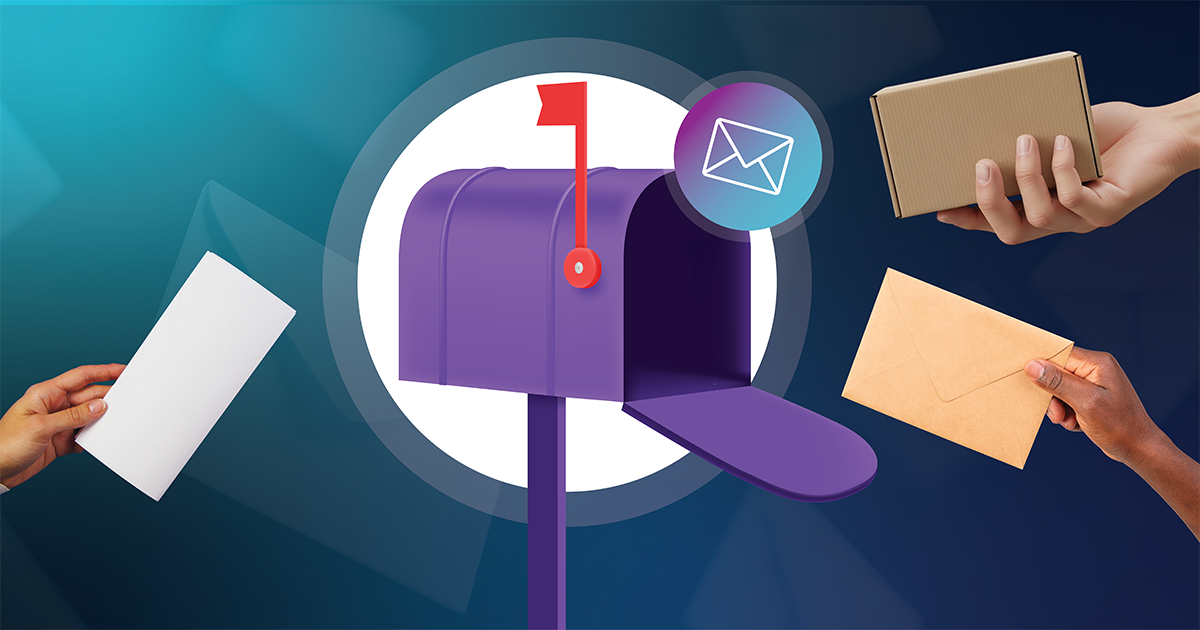
# The Power of Direct Mail in 2026 - Part 1: 5 Formats That Still Win Attention and Drive Action
Thursday , 05 March 2026 | [Blog](https://blog.vomela.com/topic/blog), [direct mail](https://blog.vomela.com/topic/direct-mail)
*By The Vomela Team*
In 2026, most marketers aren’t struggling with reach. They’re struggling with attention.
Reaching people has never been easier. Marketing teams can deploy campaigns across email, paid media, social platforms, and automated workflows in minutes. But that abundance has created a new problem: audiences are overwhelmed, and messages increasingly blur together.
When everything is optimized for delivery, differentiation becomes harder.
That’s where direct mail proves—no, *continues to prove*—its value.
Physical mail creates a different kind of moment—one that doesn’t compete in a crowded feed or disappear with a swipe. It shows up in the real world, where attention is more focused and engagement is more deliberate. And when direct mail is personalized, timed to behavior, and [integrated with digital campaigns,](https://www.pfl.com/direct-mail-products/automated-direct-mail) it becomes not just memorable, but measurable.
Brands today don’t have a reach problem—they have an engagement problem. Direct mail can solve it.
Here’s a look at five formats that continue to perform, along with practical tips for making each one work harder.
**1. Postcards**
Postcards remain one of the most effective and efficient kinds of direct mail. Their simplicity is their strength: the message is visible immediately, and the format lends itself to bold design and clear calls to action (CTA).
In 2026, postcards are especially powerful when [triggered by customer behavior.](https://www.vomela.com/what-we-do/expertise/direct-mail-automation/) Demo requests, abandoned carts, event follow-ups, renewal reminders, and re-engagement campaigns all benefit from the immediacy of a well-timed card.
Modern variable data printing allows postcards to be far more than static promotions. Messaging, imagery, offers, and CTAs can be tailored based on geography, purchase history, industry, or engagement patterns—making each piece feel relevant rather than generic.
Postcards also perform well in [acquisition campaigns](https://www.pfl.com/solutions/acquisition), [benefits enrollment reminders](https://www.pfl.com/solutions/health-tech), and local promotions where visibility and timing matter most.
**Pro Tips:**
- Use bold visuals and strong headlines that communicate value instantly.
- Keep the message focused on one primary action.
- Personalize beyond the first name whenever possible.
**2. Letters**
[Letters](https://www.pfl.com/blog/part-4-the-power-of-direct-mail--singing-the-praises-of-letters) offer something increasingly rare in marketing: a sense of personal communication.
Whether used for [onboarding](https://www.pfl.com/solutions/health-tech), [fundraising](https://www.pfl.com/solutions/nonprofit), [customer retention](https://www.pfl.com/solutions/retention), or [benefits communication](https://www.pfl.com/solutions/healthcare-payers), letters allow for more context, explanation, and storytelling than do most other formats. They’re particularly effective when the message requires trust, clarity, and/or a thoughtful tone.
What’s more, today’s personalized letters go far beyond merely inserting a name. Entire sections of content can be dynamically tailored to reflect a recipient’s status, behavior, or needs. This level of relevance transforms a form letter into a one-to-one experience.
Some applications for 2026 include:
- Welcome letters triggered by new customer onboarding.
- Benefit explanations tailored to individual plans or segments.
- Donor updates that reinforce mission impact.
- Retention campaigns for subscribers or members.
Letters also work best when coordinated with digital reminders and follow-up messaging, creating a cohesive customer journey rather than a one-off touchpoint.
**Pro Tips:**
- Personalize meaningfully, not just cosmetically.
- Focus on clarity and value rather than length.
- Use a strong P.S. to reinforce urgency or highlight a key benefit.
**3. Brochures and Catalogs**
Some stories simply need more space.
[Brochures and catalogs](https://www.pfl.com/blog/part-3-the-power-of-direct-mail-types-benefits-of-catalogs) remain powerful tools for showcasing products, services, or experiences in a way digital screens often can’t replicate. High-quality printing, thoughtful layout, and strong imagery invite recipients to slow down and explore.
In 2026, the most effective brochures and catalogs are curated rather than exhaustive. Instead of presenting everything to everyone, brands are segmenting content and tailoring versions for specific audiences.
Real estate firms, retailers, travel brands, and B2B companies with complex offerings continue to see strong results when catalogs are targeted and integrated into broader campaigns.
A well-designed catalog doesn’t feel like advertising—it feels like a resource.
**Pro Tips:**
- Invest in high-quality photography and materials.
- Organize content clearly and guide the reader through it.
- Make response easy with clear next steps and contact options.
**4. Dimensional Mailers**
When the goal is to make an impression, [dimensional mailers](https://www.pfl.com/blog/physical-mailers-the-power-of-a-new-dimension) stand apart.
Boxes, kits, and three-dimensional packages create an experience that begins the moment the recipient sees the package and continues through the unboxing process. They’re highly effective for high-value prospects, executive outreach, product launches, and customer appreciation.
Dimensional mail works because it combines surprise, curiosity, and perceived value—three factors that drive engagement.
The format is especially effective in [account-based marketing programs](https://www.pfl.com/solutions/sales), where personalized gifts or creative concepts can help open doors and move conversations forward.
**Pro Tips:**
- Design the unboxing experience as carefully as the contents.
- Ensure every item inside supports the message or objective.
- Follow up promptly to extend engagement to the next step.
**5. Newsletters**
[Printed newsletters](https://www.pfl.com/blog/extra-extra-brand-newsletters-educate-and-entertain) offer a way to stay connected without always selling. Creating and sharing content that educates *and* entertains is powerful branding.
Newsletters are ideal for sharing insights, updates, educational content, or industry trends while building familiarity and trust over time. Financial institutions, healthcare organizations, associations, and nonprofits all use newsletters to maintain ongoing relationships with their audiences.
In a world of fleeting digital content, a printed newsletter has staying power. It can sit on a desk, be shared, or revisited—extending its lifespan far beyond a typical email open.
The key is to make the content genuinely useful or interesting, not promotional filler.
**Pro Tips:**
- Provide content that informs and/or entertains.
- Maintain a consistent cadence to build expectation.
- Use clean layouts and strong visuals to keep reading easy.
**Why Direct Mail Works in 2026**
Direct mail continues to perform because it engages people differently. It introduces a physical element that cuts through the digital din while still fitting seamlessly into modern, data-driven marketing strategies.
Today’s direct mail campaigns are highly targeted, automated, and measurable. They can be triggered by behavior, personalized at scale, and [integrated directly into CRM and marketing automation platforms](https://www.vomela.com/what-we-do/expertise/direct-mail-automation/).
The result is not just better attention—but better outcomes.
When brands combine thoughtful design, relevant messaging, and smart timing, your direct mail in 2026 will become more than a channel. It becomes an experience.
**Continue the Conversation**
Looking to connect automated, personalized direct mail to your existing marketing workflows? [Vomela and PFL](https://www.vomela.com/what-we-do/expertise/direct-mail-automation/) help teams simplify execution, personalize at scale, and measure performance from send to conversion.
Mar 05, 2026 |
Topics: [Blog](https://blog.vomela.com/topic/blog), [direct mail](https://blog.vomela.com/topic/direct-mail)
Share This, Choose Your Platform!
- [Tweet](https://twitter.com/share)
### Related posts
[Part 2: The Power of Direct Mail in 2026: Types & Benefits of Postcards](https://blog.vomela.com/part-2-the-power-of-direct-mail-in-2026-types-benefits-of-postcards)
[Vomela Signs the Climate Pledge: A Commitment Backed by Action](https://blog.vomela.com/vomela-signs-the-climate-pledge-a-commitment-backed-by-action)
[Riverside-Backed Vomela Appoints Brian Hazelton as CEO Following Year of Strategic Growth](https://blog.vomela.com/riverside-backed-vomela-appoints-brian-hazelton-as-ceo-following-year-of-strategic-growth)
[Get Superior Quality](https://www.vomela.com/contact/)
Learn more about our expertise, services, premier materials, and applications.
[Contact Us](https://www.vomela.com/contact/)
[Join our Exceptional Team](https://www.vomela.com/careers/)
Opportunities in sales, creative design, engineering, production - and more!
[Careers](https://www.vomela.com/careers/)
[](https://www.vomela.com/)
**The Vomela Companies**
[845 Minnehaha Avenue East Saint Paul, MN 55106](https://goo.gl/maps/wsLu8ev2EV9m14XQ7)
[(651) 228-2200](tel:1-651-228-2200)
[Contact](https://www.vomela.com/contact/)
- [What We Do](https://www.vomela.com/what-we-do/)
- [Our Work](https://www.vomela.com/our-work/)
- [Who We Are](https://www.vomela.com/who-we-are/)
- [Our Companies](https://www.vomela.com/our-companies/)
- [Careers](https://www.vomela.com/careers/)
- [Resources](https://www.vomela.com/resources/)
- [Online Login](https://online.vomela.com/)
Expertly Visualize Your Story
[](https://www.vomela.com/wp-content/themes/bedstone/images/Vomela-ISO-9001-2015-2018.pdf)
[](https://www.vomela.com/wp-content/themes/bedstone/images/Vomela-Idealliance-G7-Master-Facility-Grayscale-2020.pdf)
[](https://sgppartnership.org/printer/vomela/)
© 2024 The Vomela Companies
- [Policies & Practices](https://www.vomela.com/policies-and-practices/)
- [Accessibility Policy](https://www.vomela.com/accessibility-policy/)
- [Site Credits](https://www.windmillstrategy.com)
-
-
-
-
-