
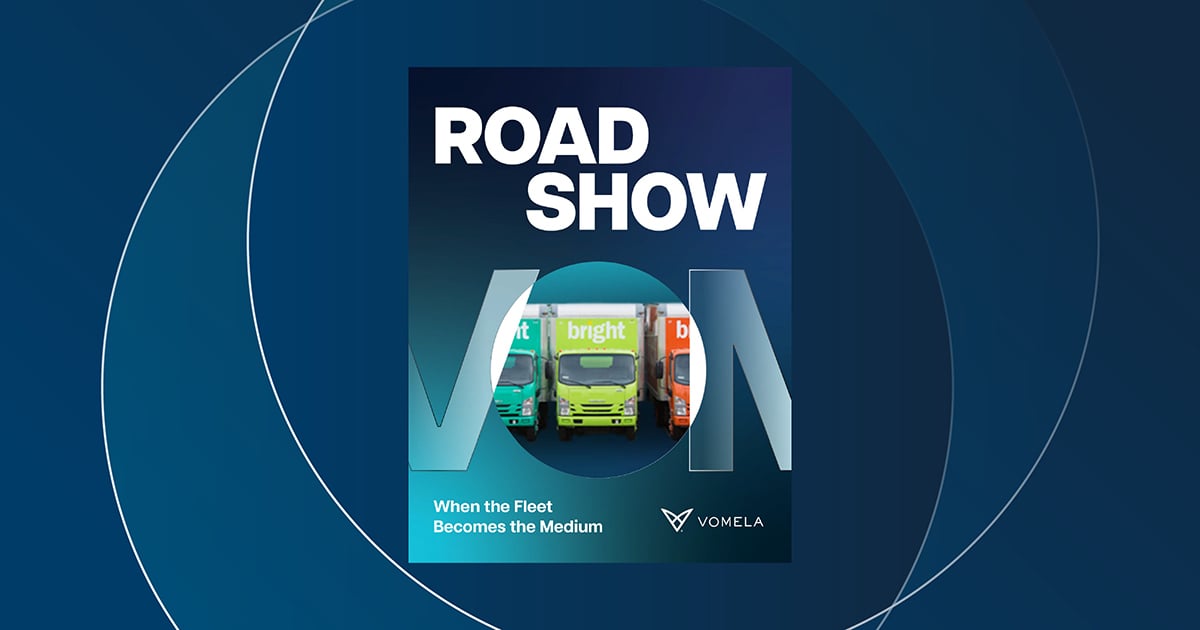
When the Fleet Becomes a Shared Opportunity
Thursday , 05 February 2026 | Blog, Fleet & Transit, fleet graphics, transportation, Vehicle Wraps
By The Vomela Team
In transportation-driven organizations, marketing, operations, and fleet leadership often view the same assets from different vantage points. That diversity of perspective isn't a liability—it's an advantage. Few elements of a business touch as many priorities at once as a fleet, which is precisely why fleet branding presents such a powerful opportunity when approached intentionally.
A fleet is not just a collection of vehicles. It's a moving system that operates at the intersection of visibility, performance, and trust. When organizations begin to see their fleet as distributed brand infrastructure—assets that work for the brand every mile, every day—branding decisions start to account for that reality. Fleets can simultaneously support growth, efficiency, and credibility, all without forcing tradeoffs between creativity and practicality.
The most forward-thinking organizations have begun to recognize this shift. They no longer see fleet branding as a tactical exercise or a one-time project, but as a shared platform that benefits multiple stakeholders across the business.
The Marketing Opportunity: Presence With Credibility
From a marketing perspective, fleets represent one of the most consistent and authentic forms of brand presence available. Vehicles don't rely on media buys or algorithms. They show up—day after day—where customers, employees, and communities live and work. But effective visibility today is about more than being seen—it's about being recognized and trusted.
Consistency across vehicles and regions reinforces brand legitimacy. Thoughtful design that performs at speed and distance reinforces clarity, while well-maintained graphics signal care and professionalism. Together, these elements transform fleet branding from mere exposure into a genuine brand signal.
Marketing leaders increasingly understand that brand equity is built not only through campaigns, but through how reliably a brand shows up in the physical world.
The Operational Opportunity: Predictability at Scale
For fleet and operations leaders, the opportunity lies in predictability. When fleet branding is planned with operational realities in mind—vehicle lifecycles, maintenance schedules, installation logistics—it becomes more manageable. Materials last longer. Replacements are simpler. Downtime is reduced rather than extended.
This is where a systems-based approach makes a measurable difference. Standardized specifications and documented processes allow fleets to evolve without disruption. Rather than reacting to branding needs as they arise, organizations can plan for them—integrating branding into the natural rhythm of fleet operations. The result is not just better-looking vehicles, but smoother operations and fewer surprises.
The Leadership Opportunity: Brand as Proof of Execution
For executive and procurement leaders, fleets are a visible expression of how well the organization operates at scale. A cohesive, well-maintained fleet signals alignment. It suggests that the organization values consistency, plans ahead, and follows through. Conversely, fragmented or outdated branding can raise unnecessary questions about coordination and company’s attention to detail.
Fleet branding increasingly sits within broader conversations about brand governance and enterprise execution. Leaders know that the brand is not just what is promised in messaging, but what is delivered through everyday operations. When fleets reflect clarity and cohesion, they quietly reinforce confidence in the business itself.
Where Alignment Creates the Greatest Value
The true potential of fleet branding is unlocked when all three perspectives—marketing, operations, and leadership—are considered together from the start. Design choices are informed by how vehicles are actually used. Material selections account for environment and lifecycle, not just cost. Installation strategies respect uptime and geography. Updates are planned as part of an ongoing system, not handled reactively.
In this model, branding becomes easier to manage precisely because it's been thoughtfully integrated. Tradeoffs don't disappear—they become intentional. Decisions are made with a shared understanding of impact across the organization. This kind of alignment transforms fleet branding from a point of negotiation into a shared advantage.
A Strategic Discipline, Not a Tactical One
This evolution explains why fleet branding is increasingly treated as a marketing discipline rather than a production task. It requires understanding brand systems, operational workflows, and long-term asset management. It demands coordination across teams that don't always collaborate naturally. And it benefits from partners who understand not just how to produce fleet graphics, but how fleets function as living systems.
When approached this way, fleets become more than transportation. They become infrastructure—assets that quietly, consistently reinforce who the company is and how it operates. They become the brand in motion.
A Moving Expression of the Brand
Every fleet already communicates something. The opportunity lies in making that communication both exceptional and intentional. Organizations that treat fleet branding as a shared responsibility rather than a departmental handoff discover that alignment doesn't slow things down—it accelerates them. Vehicles stay on the road, the brand shows up consistently, and leadership gains confidence that the business is presenting itself with clarity wherever it operates.
In a world of ephemeral digital impressions, fleets offer something increasingly rare: a physical, persistent presence that does real work every day. When marketing, operations, and fleet leadership recognize that shared opportunity, the fleet becomes more than a necessity. It becomes an expression of the organization and a brand that really delivers.
Feb 05, 2026 |
Topics: Blog, Fleet & Transit, fleet graphics, transportation, Vehicle Wraps